
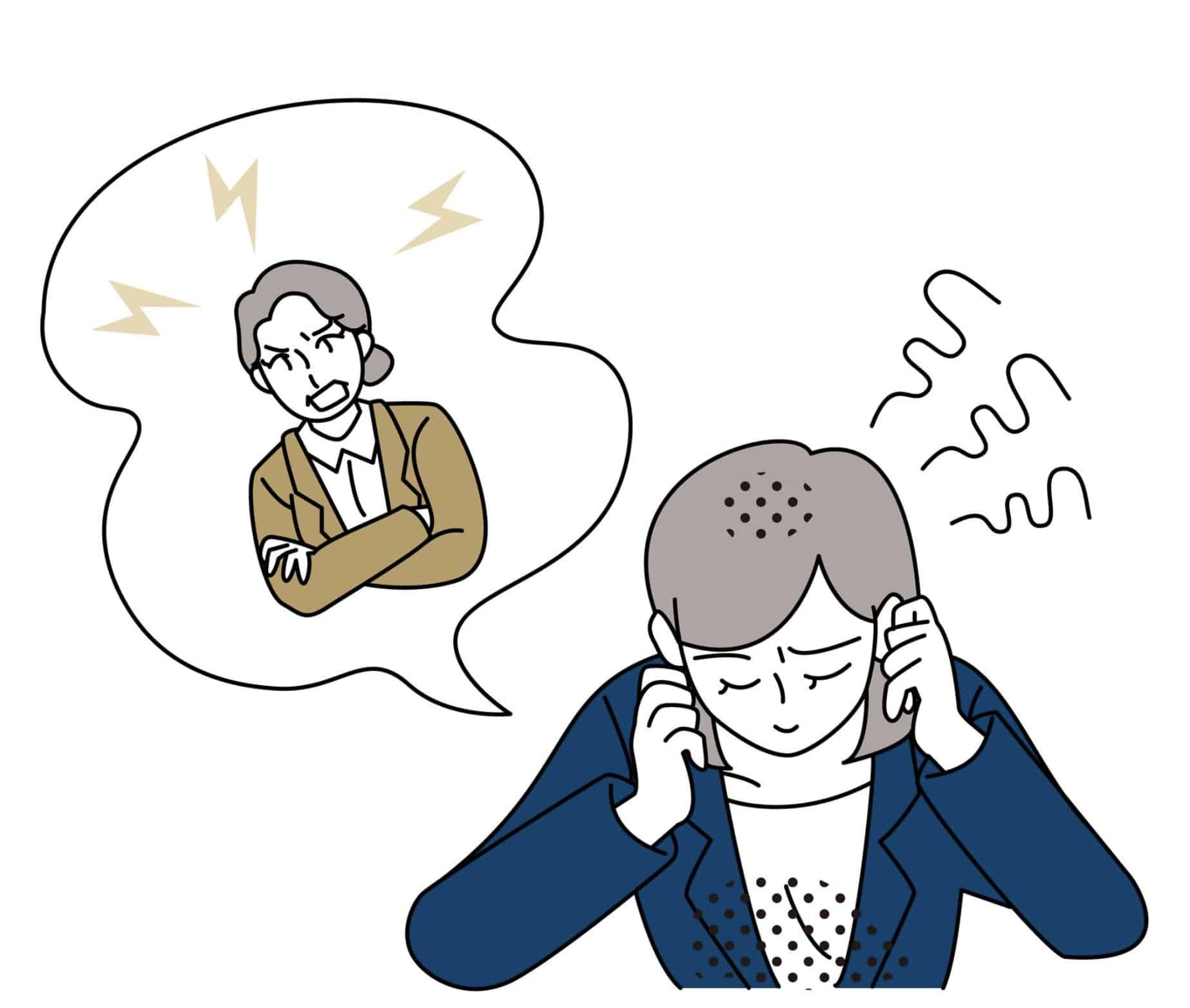
Imposter syndrome vs anxiety often feels impossible to separate, especially when you know your material, you've prepared, and you are capable.
And yet, the moment you're asked a question or put on the spot, your mind goes blank, your heart races, and a familiar thought appears: "They're about to realise I don't really know what I'm doing."
Most people call this anxiety. While anxiety is part of it, that explanation often doesn't go far enough, especially when these feelings only appear when you're visible, evaluated, or challenged.
In my work with high-performing professionals, what seems like anxiety is often something else: imposter syndrome working at a subconscious level. This matters because if we mislabel the problem, we try solutions that never fully work.
Understanding the difference between imposter syndrome and anxiety is essential if you want to address what's really driving these reactions. This helps you address the real causes, rather than treating surface symptoms each time they come up.
What is the difference between imposter syndrome and anxiety?
These feelings often show up together. If you worry about being exposed as incompetent, your body naturally stays tense. Knowing which feeling is behind your experience can help you figure out how to deal with it.
Why anxiety and imposter syndrome are so often confused
Is imposter syndrome anxiety? If you've ever sat in therapy or coaching trying to articulate what you're experiencing, you've probably noticed how hard it is to separate the two. That's because, on the surface, they look remarkably similar.
Both can show up as:
- Racing heart before presentations or essential meetings
- Physical tension that builds up in your shoulders or chest
- Overthinking every exchange, replaying conversations on loop
- Avoiding opportunities you logically know you should pursue
- Lack of confidence that feels disproportionate to the situation at hand
- Anxiety and digestive problems
These symptoms can overlap, so clinicians and researchers sometimes treat them the same way, as Bravata et al. (2020, pp. 1252-1275) found many similarities in reported experiences and clinical approaches among high-achieving people. Because of this, people might get help like breathing techniques meant to reduce anxiety when the real issue is actually deep beliefs about their abilities. On the other hand, confidence-building efforts may not help if the real problem is anxiety about things you can't control, not doubts about your skills. Recent research highlights the importance of distinguishing between these conditions so people can get the right kind of support.
But here's where Rapid Transformational Therapy takes a different approach.
In RTT, instead of focusing only on your emotional reactions, we look at the underlying beliefs your mind sees as at risk. This means finding the subconscious threats behind your reactions, which helps us understand the real root causes.
Because under those identical physical symptoms lie two very different subconscious belief systems. Anxiety says, "Something bad is going to happen." Imposter syndrome says, "I'm going to be exposed as not good enough."
You might have the same racing heart, but the root cause is different. The belief started at a different point in your past, so it takes a different kind of work to create lasting change.
This difference changes everything about how we work on what's been holding you back.
What anxiety really is (from a subconscious perspective)
Anxiety is a threat response. Sometimes it's a reaction to something real and present, but often it's about something you expect to happen. In RTT, anxiety often shows up when the mind has learned: "This situation isn't safe."
So the system goes into scanning mode: What might go wrong? How do I prevent it? How do I stay in control?
Common anxiety-driven meanings:
- “If I mess up, something bad will happen""
- “I won't cope with the feelings."
- “It's safer to avoid than to risk""
You may often find yourself doing or feeling:
- Catastrophising ("What if…?")
- Control strategies (over-prepping, reassurance seeking, avoidance)
- Somatic intensity ("My chest constricts, I can't breathe, I go blank")
What is often found in RTT is:
- Early experiences of volatility, criticism, humiliation, or emotional overwhelm.
- Modelling from anxious caregivers ("the world is dangerous").
- A younger self who learned to be hypervigilant as a form of protection.
- A sensitised stress response that got paired with performance, conflict, authority, or attention.
In other words, anxiety tries to protect you by making you anticipate problems.
What imposter syndrome actually is — and why it feels so personal
Imposter syndrome: identity is stuck in "not enough / not allowed" Imposter syndrome is less "danger is coming" and more "I am the danger" (I'm flawed, I'm not really qualified, I'm about to be found out). It's an identity-based pattern.
In RTT terms, it is usually a belief loop like:
"I don't belong here", or "I'm only safe if I'm perfect."
Common imposter-driven meanings:
- "If they see the real me, I'll be rejected."
- "I got lucky—next time I'll fail."
- "I must prove my worth constantly."
If it is primarily imposter syndrome, you will often hear:
- Identity statements ("I am not good enough / I am a fraud")
- Shame and fear of exposure
- Discounting success ("They are just being nice")
What we often find in RTT is:
- Conditional praise (love/approval tied to performance).
- Being compared to others, or never feeling "enough" even when achieving.
- A role in the family system (peacemaker/high achiever/invisible child).
- Moments during visibility led to shame ("Don't show off," "Who do you think you are?")
- Belonging wounds: being the outsider, the different one, the one who had to "earn" a place.
Overall, imposter syndrome shows up as trying to protect yourself by staying invisible or always aiming for perfection.
Imposter syndrome vs anxiety: The key differences that matter
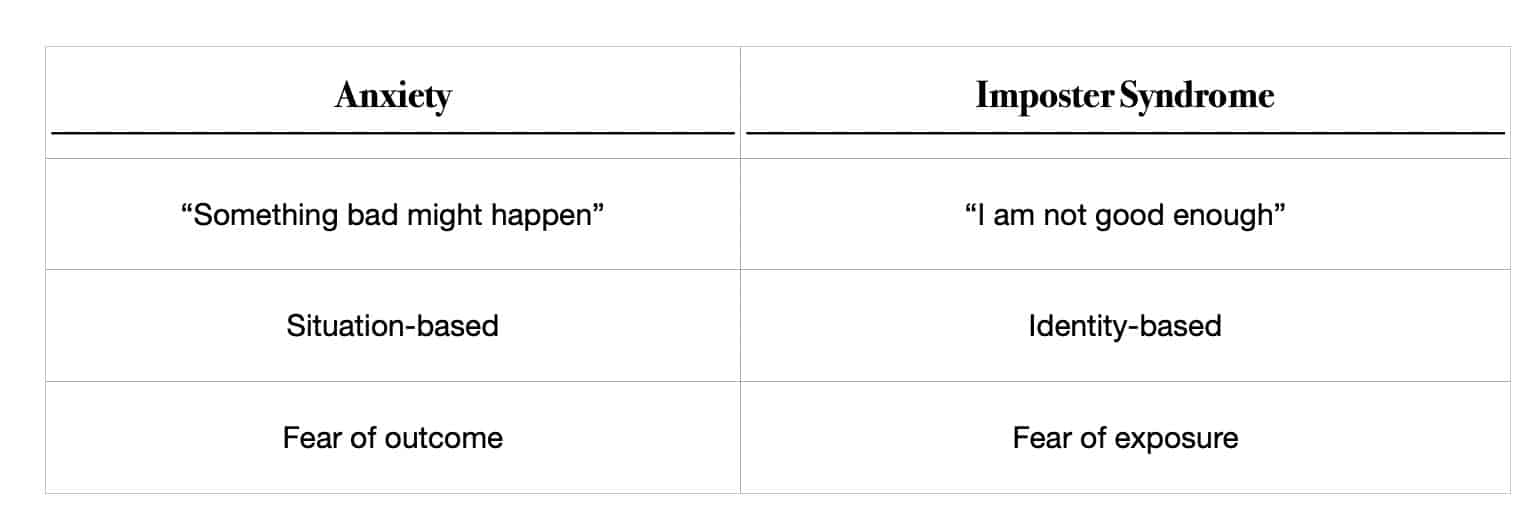
The difference between anxiety and imposter syndrome. A client might say, "I'm anxious about presenting," but underneath it might be imposter shame:
- Anxiety says, "Presenting is dangerous."
- Imposter says, "I am inadequate."
Or they'll say, "I have imposter syndrome," but the engine is nervous-system fear:
- "My body panics when I am perceived," even if they logically know they're capable.
Anxiety is your mind trying to protect you from a feared outcome.
Recent research shows that imposter syndrome does not just come from a general need to protect yourself. It is shaped by your doubts about your abilities and influenced by both personal and work experiences. Guenes et al. (2025) say that to really help, we need to look past surface labels and focus on the specific experiences and patterns behind imposter feelings. This means looking at the personal stories and key moments that led to your self-doubt: What did you decide was true about yourself, and when did you decide it?
Is imposter syndrome a form of anxiety?
No, but they often coexist, and understanding why matters.
Imposter syndrome is not a subset of anxiety. It's an identity-based belief system, usually rooted in the conviction that you're inadequate, unqualified, or don't belong. Anxiety, on the other hand, is a threat-based response: your nervous system is anticipating danger or loss of control. They operate from different subconscious scripts, even when they produce similar physical symptoms.
However, imposter syndrome frequently triggers anxiety. If you believe you'll be "found out" as incompetent, your nervous system will naturally stay on high alert. The anxiety becomes a symptom of the deeper identity wound and is your body's way of trying to protect you from the exposure you fear. This is why treating only the anxiety often provides temporary relief without addressing what's actually driving it.
This distinction matters because how you address anxiety depends on its root cause. Techniques for managing anxiety can help with the symptoms. However, if you still believe "I'm not good enough," the anxiety is likely to come back. Resolving imposter syndrome at its source often means the accompanying anxiety dissolves naturally because there's no longer a threat to protect against. This is why labelling matters. When you identify what's actually driving your response, you can address the real problem rather than managing surface symptoms indefinitely.
What about social anxiety and self-doubt?
It is exhausting when you can't quite name what you're feeling. Maybe you walk into a room and suddenly feel tense. Or you get offered a promotion, but instead of feeling happy, you feel dread. That might sound like imposter syndrome at first, but sometimes the real cause is a bit different, like social anxiety or simple self-doubt.
Social anxiety comes from the fear of being seen, judged, or evaluated by others. It is not about achievement. You may experience it in simple things like ordering a coffee, going to a party, or being in a meeting, even if no one is looking at you. The fear is about being exposed, not about your abilities.
Self-doubt is the broadest of the three. It's a basic uncertainty about yourself, your decisions, your judgment, or your worth. Unlike the other two, it isn't tied to a specific trigger. It can show up as part of imposter syndrome, social anxiety, or all by itself. You might experience all three at once. For example, a high-achieving professional could feel imposter syndrome about a promotion, social anxiety when presenting to the board, and a quiet self-doubt that has been there long before either job.
Here's what to look for: If it is imposter syndrome, you subconsciously or consciously will ask, "Do I deserve this?" Whereas social anxiety asks, "What will they think of me right now?" Self-doubt is different again; it asks, more quietly and more often, "Can I trust myself?"
The difference isn't just about understanding what you may be suffering from. It affects what actually helps. RTT finds where your specific pattern began, because the subconscious root of "I don't deserve this" is not the same as the root of "they're all watching me," even though both can leave you feeling equally stuck.
Why insight and coping techniques only go so far
Insight alone does not equal change.
Research on therapeutic change has long shown that knowing why a belief exists doesn't automatically make it feel less true. You may understand that your self-doubt came from family dynamics, early experiences, or workplace pressure. You can explain it clearly and still react in the same way.
That's because understanding happens in the conscious mind, while emotional reactions are driven elsewhere.
Logic doesn't reach the subconscious.
Your rational mind processes insights and analyses. But emotional memories and core beliefs are stored differently in implicit memory, in the body, and in subconscious patterns that don't respond to reasoning or reassurance.
This is why you can know you are qualified for your role and still feel your heart race before presenting. You can recognise perfectionism but struggle to let go of it. The subconscious programming is still running the show.
Confidence can't be talked into existence.
If the root belief remains unchanged, your body will keep reacting, even when your mind knows better.
How RTT works with anxiety vs imposter syndrome
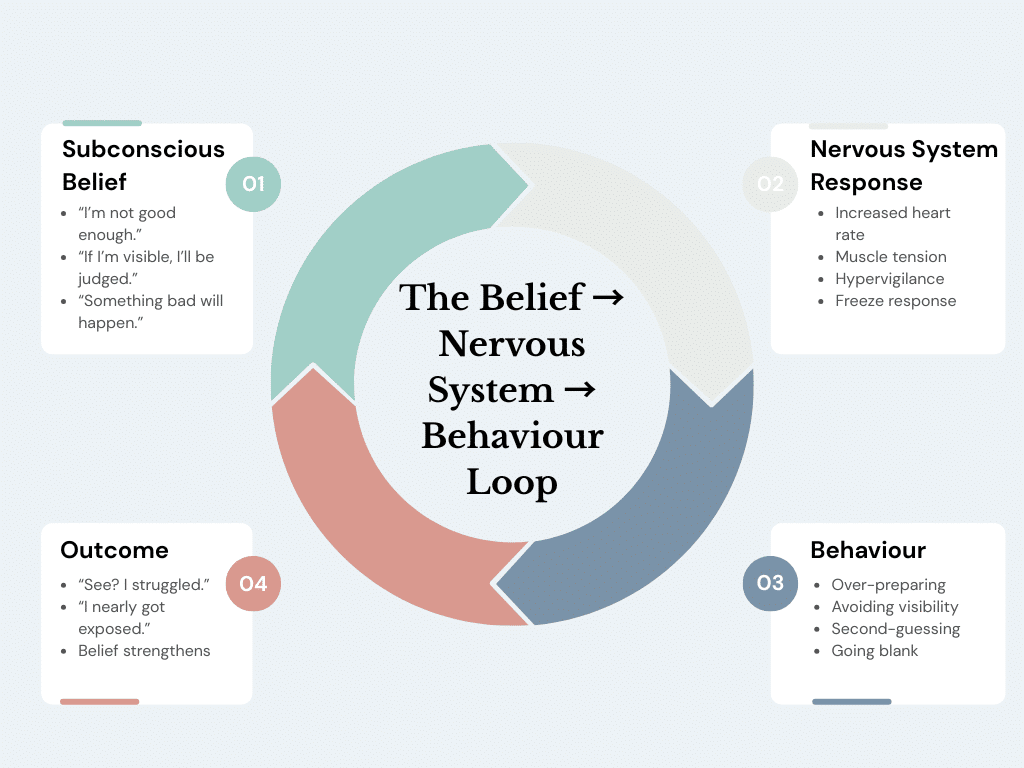
Rapid Transformational Therapy (RTT) works by identifying and updating the subconscious beliefs that drive both anxiety and imposter syndrome.
This distinction matters because understanding it shapes how we address these conditions at their source.
Traditional ways often treat anxiety and imposter syndrome as separate issues, using anxiety therapy for one and confidence-building for the other. However, Rapid Transformational Therapy takes a different view. It looks for and addresses the subconscious beliefs behind both, often showing how closely connected they are.
RTT identifies the root cause
Instead of just managing symptoms, RTT uses regression to find the exact moments when limiting beliefs first formed. For imposter syndrome, this could be when you started to believe "I'm not good enough" or "I don't belong here." For anxiety, it might be when you learned "the world is unsafe" or "bad things happen when I am seen."
Working with subconscious beliefs, not just symptoms
RTT is powerful because it works at the subconscious level, where these beliefs are really stored. (Woolf, 2024) While conscious-level work helps you understand why you feel inadequate or anxious, subconscious work addresses the original programming that underlies those feelings. In RTT, this happens through regression, where you're guided to remember and revisit earlier experiences when limiting beliefs first formed. This could mean going back to a time when a teacher corrected you in front of the class at age seven, or when you were not picked for the team at age twelve, and changing the meaning you gave yourself in that moment.
Reframing the first meaning
Once you find the root scene, RTT helps you change how you understood it back then. For example, a child who thought 'I'm stupid' after struggling with maths can, as an adult, see that maybe the teaching style didn't fit, that they had undiagnosed learning challenges, or that they just needed more time. The facts of the scene stay the same, but the meaning and the belief can change.
Calming the nervous system by changing identity-level beliefs
Here's what makes this approach especially effective for professionals struggling with workplace confidence: when you change an identity-level belief from "I'm not intelligent enough" to "I'm capable and qualified," the nervous system no longer perceives the same threat. The anxiety that was protecting you from exposure becomes unnecessary. (Imposter Syndrome, Nervous System Lens, 2025)
You don't need to decide anything right now.
If you recognise yourself in these experiences freezing under pressure, fearing exposure, or feeling frustrated that you can't access your abilities when it matters- it may be worth exploring whether the root issue is anxiety, imposter patterns, or a combination of both. Gaining clarity is often the first step toward meaningful change.
When imposter syndrome is resolved at the subconscious level, confidence doesn't need to be forced. It becomes something steadier and more natural.
If you'd like to explore this further, I offer a complimentary 20-minute Zoom conversation.
In this call, we will:
-
Talk through the situations where you feel most stuck or triggered
-
Explore the patterns in how you respond under pressure
-
Clarify what may be happening beneath the surface
-
Decide whether RTT feels like the right next step for you
To schedule this call, use my online calendar to book at a time that suits you.